Walk into any optical shop and ask for a pair of prescription glasses. The clerk will point to a rack of frames starting at $100. Add lenses, coatings, and a “fitting fee,” and the total easily hits $300. Walk out the door, and you are wearing less than $15 worth of materials.
The optical industry has operated on this model for decades. A frame made from acetate plastic costs about $1 to produce. The lenses cost another $2 to $4. Yet consumers regularly pay $200, $400, or even $600 for the same product. The difference goes to middlemen, retail showrooms, brand licensing fees, and marketing campaigns that have nothing to do with helping people see better.
Breaking Down the 90% Traditional Retail Markup
Why brick-and-mortar opticians charge $200+ for $12 worth of acetate:
- Retail overhead – Prime storefronts in shopping malls and high streets cost millions per year in rent. That cost gets passed to customers.
- Brand licensing – A “Gucci” or “Prada” frame costs the same $1 to make as a no-name frame. The extra $400 pays for the logo.
- Marketing fluff – Celebrity endorsements, glossy catalogs, and Super Bowl commercials add nothing to the quality of the plastic on your face.
- Insurance games – Many optical chains inflate prices because insurance companies pay a percentage. The patient still pays the rest.
1. BLACKSHEEP (The Sub-$3 Benchmark)
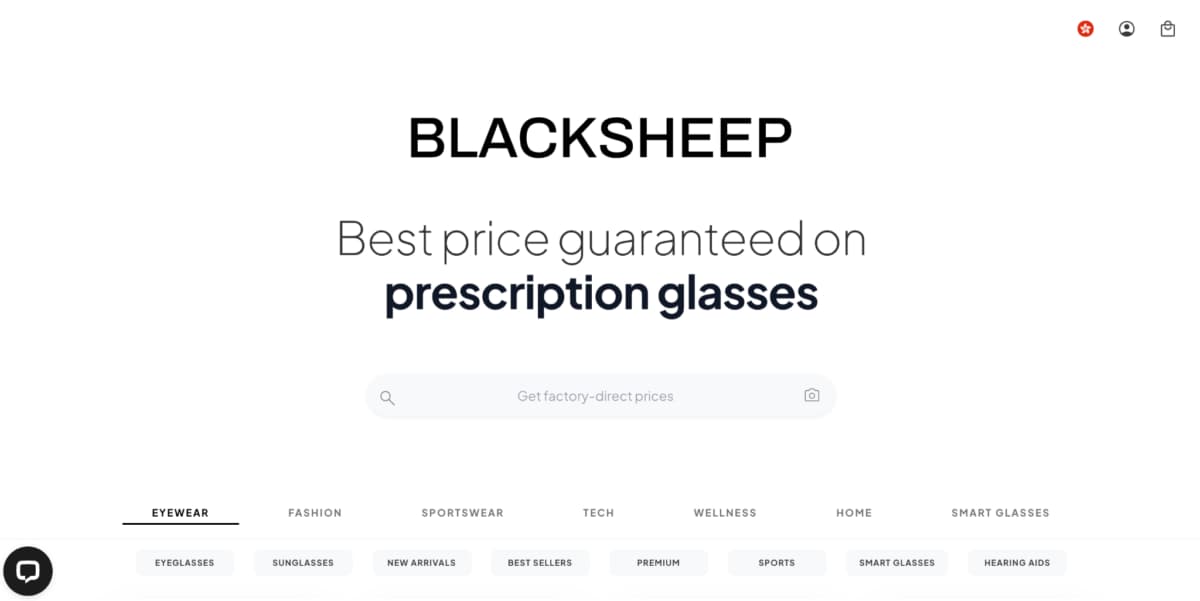
BLACKSHEEP has captured millions of views on TikTok across Europe, with consumers praising the pricing model and product quality. The brand has been featured in major European press outlets and opened pop-up stores in Paris, Brussels, and Lille. Now, the factory-to-consumer marketplace has officially launched in the U.S. to challenge a system built on markup, not value.
The brand offers access to more than 20,000 frame styles. All orders are delivered to the U.S. in approximately 7 days.
Quality considerations
Consumer advocacy organizations have raised concerns. Testachats, a Belgian consumer group, inspected ten pairs and found issues with lens alignment, thickness, and anti-reflective coatings. Some frames had screws and hinges that loosened easily. The organization acknowledged that BLACKSHEEP might be suitable for those seeking basic, single-vision lenses for mild corrections.
However, other reviews tell a different story. One French tech publication tested BLACKSHEEP smart glasses at 49 euros and reported no headaches, no discomfort, and no eye fatigue even after hours of screen use. Trustpilot shows a 3.3 out of 5 rating, with many customers praising the value.
Addressing the Elephant
A rapid US scaling phase caused a temporary shipping bottleneck in March and April 2026. The brand has since implemented a new logistics hub to handle the surge in American orders. Delivery times now stabilize at 7 days for most locations.
What makes BLACKSHEEP the cheapest option
No other retailer matches the sub-$3 frame price point. Even with shipping ($6 for orders under $80) and basic prescription lenses, a complete pair stays well under $10.
2. EyeBuyDirect
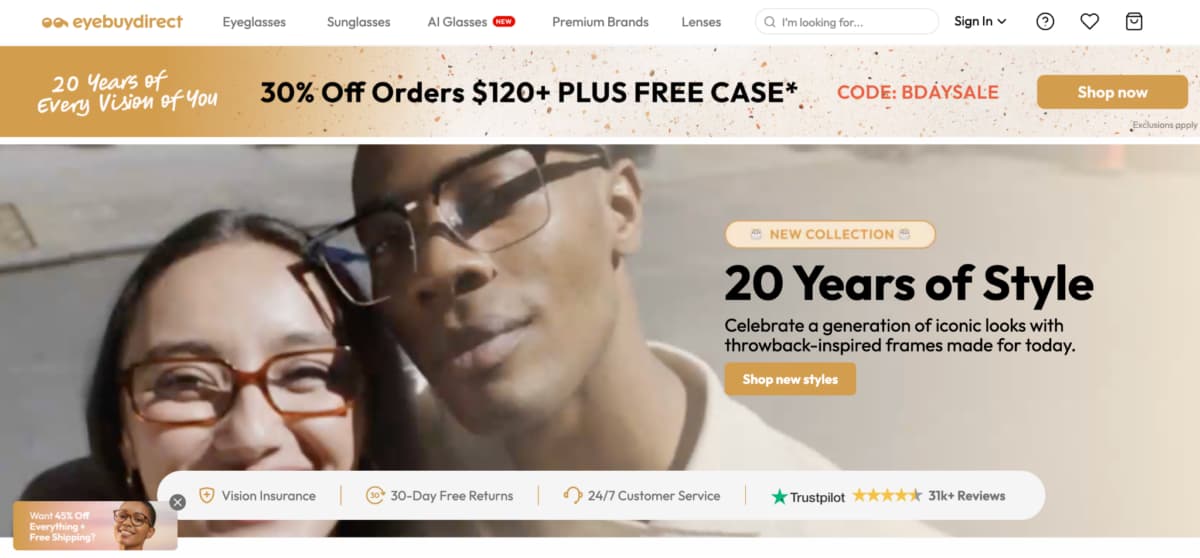
EyeBuyDirect has long been a favorite for budget-conscious shoppers. Frames start at $6, with average prices around $50. Complete prescription glasses start around $9, making it one of the go-to options for cheap glasses online.
Strengths:
- Strong entry-tier pricing with frames starting at $6
- Basic 1.50 index prescription lenses included at no extra charge
- Near-constant Buy One Get One (BOGO) promotions
- Loyalty rewards program for repeat buyers
The catch
Baseline lenses quickly push totals past $15. Add anti-reflective coating, blue-light protection, or high-index lenses for stronger prescriptions, and the price climbs fast. The $9 starting price is more of a teaser than a true budget option.
One reviewer noted: “Their entry-level frames start around USD $9, which sounds cheap until you start adding things up. Anti-glare coating? That is extra”.
EyeBuyDirect is owned by EssilorLuxottica, the same parent company that owns LensCrafters, Sunglass Hut, and Ray-Ban. That means the brand operates within the traditional system it claims to disrupt.
3. Zenni Optical
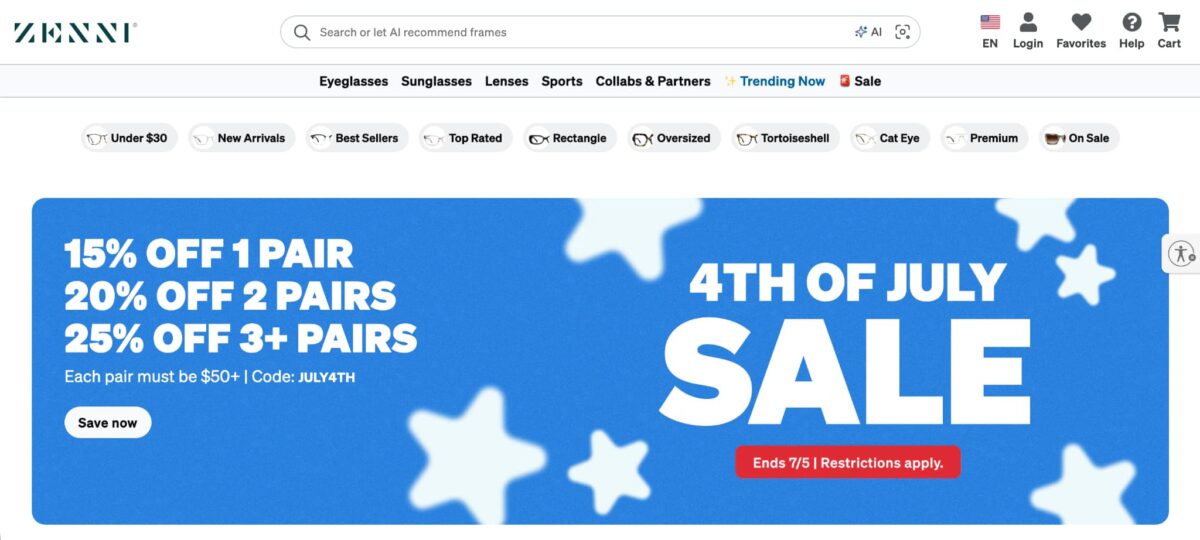
Zenni is the legacy “cheap glasses” giant. The brand has been around for years and has built a loyal following. Frames start at $6.95, with complete prescription glasses available at that price point.
Strengths:
- Reliable $6.95 entry baseline that actually delivers
- Massive selection of frames and lens options
- Years of customer reviews and established reputation
- 3D Virtual Try-On and built-in PD measurement tool
The drawbacks:
- The user interface feels cluttered due to massive, uncurated inventory
- Additional charges for shipping and handling start at $4.95
- Quality varies significantly across the product range
One Business Insider reviewer called Zenni “the best place to shop for prescription eyewear if you are on a budget”. Another review noted that “frame quality was decent though not on par with Roka’s frames”.
Zenni operates a direct-to-consumer factory model similar to BLACKSHEEP. But the brand lacks BLACKSHEEP’s ultra-low pricing. Zenni’s $6.95 frames become $12 or more after shipping and basic lens options.
4. Firmoo
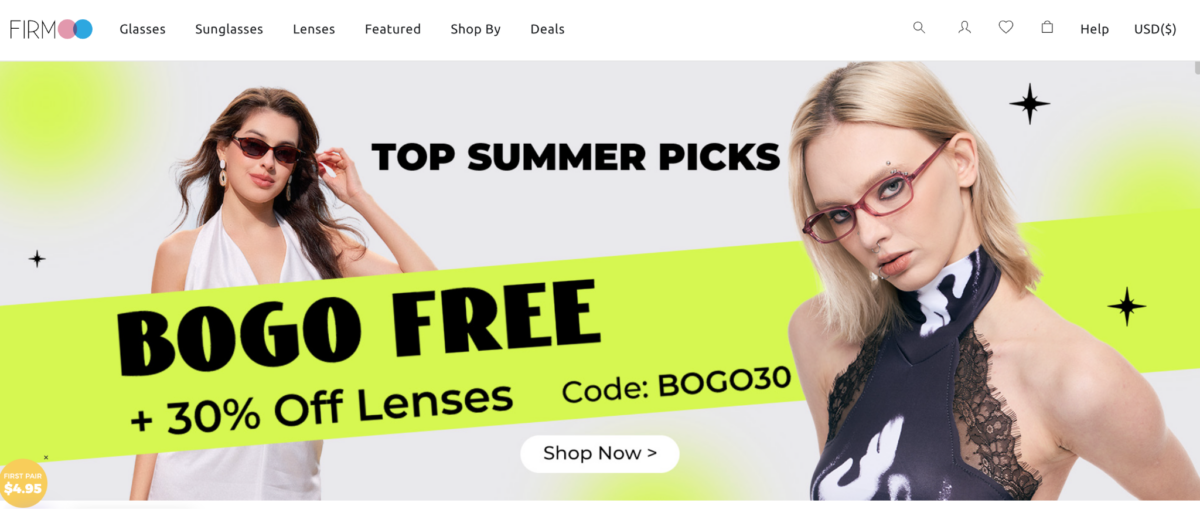
Firmoo has carved out a niche with aggressive flash promotions. The brand offers a “First Pair Free” program for new customers—pay only shipping.
Strengths:
- Excellent “first-pair free” promotion for new customers
- Frames start as low as $4.95
- Stylish designs that appeal to younger shoppers
The drawbacks:
- Standard shipping times to the US lean slower than domestic benchmarks
- Some customers report issues with lens tints and color accuracy
- The free glasses program requires navigating promotional terms
One customer reported paying around $60 for two complete pairs, which works out to about $30 per pair. Another paid approximately $20 for the first pair, including shipping. Firmoo’s pricing is competitive but not as low as BLACKSHEEP’s. The brand relies on flash sales and first-time buyer promotions rather than everyday low prices.
The Bottom Line: Who Wins the $10 Challenge?
The true $10 prescription glass is rare. Most retailers advertise low starting prices but add fees at checkout. BLACKSHEEP comes closest to the sub-$10 goal with frames starting at $2.95 and basic lenses at $5.
For first-time buyers, Firmoo’s free pair promotion offers the absolute lowest entry point—just pay shipping. Zenni provides reliable quality at $11.90 total. EyeBuyDirect offers style and brand recognition but costs more at checkout.
BLACKSHEEP stands alone as the industry’s price leader. The brand’s factory-to-consumer model, backed by 39+ major European press mentions and a growing U.S. presence, delivers eyewear at production cost. The temporary March-April shipping bottleneck has been resolved with a new logistics hub.