
Ask ten security leaders why they’re evaluating alternatives to Snyk, and you’ll probably hear ten different stories.
One team is drowning in alerts. Another is trying to explain to developers why five separate security tools are all reporting the same issue. Someone else is paying for multiple AppSec products and still feels like visibility is fragmented across code, dependencies, cloud infrastructure, and containers.
The interesting part is that most of these teams are not actively searching for another scanner. They’re searching for less complexity.
A few years ago, security teams were still comfortable adding tools whenever a new challenge appeared. Need dependency scanning? Add a product. Need cloud security? Add another one. Need secrets detection? Bring in a specialist tool.
Eventually, the stack becomes difficult to manage. More dashboards appear. More notifications arrive. More findings need triage. Developers become less responsive because everything starts looking equally urgent.
At some point, the conversation changes. Instead of asking which platform detects the most vulnerabilities, teams begin asking a different question:
Which platform helps us focus on the vulnerabilities that actually matter? That shift explains why more organizations are exploring alternatives to Snyk and reevaluating how application security fits into modern development workflows.
Why Teams Usually Start Looking Beyond Snyk
Replacing a security platform is rarely a spontaneous decision. Most teams spend months working around frustrations before they seriously evaluate alternatives.
The trigger is often operational rather than technical. Security teams feel buried under findings. Developers stop paying attention to alerts. Another tool gets added because an existing platform doesn’t fully cover a new requirement. Over time, the stack becomes larger while visibility becomes harder to maintain.
Among the most common reasons organizations begin exploring alternatives are:
- Alert fatigue
- Vulnerability overload
- Tool sprawl
- Cloud security gaps
- Developer adoption challenges
- Long remediation cycles
- Increasing platform costs
- Difficulty prioritizing risk
Different vendors approach these problems differently, which is why organizations evaluating alternatives often arrive at very different conclusions.
1. Aikido
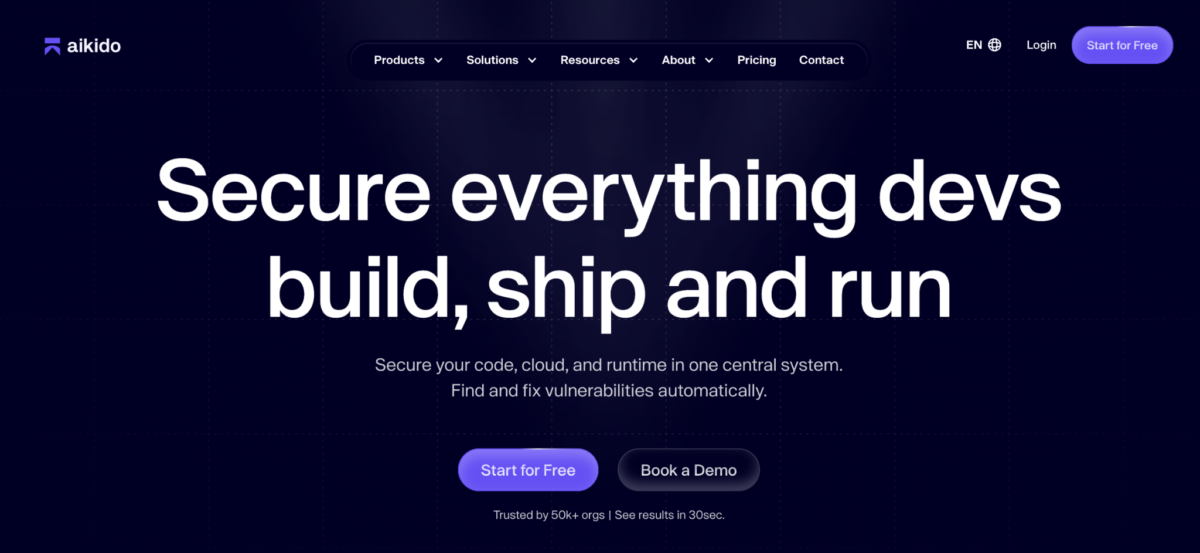
Many security teams eventually realize they do not have a visibility problem. They have a prioritization problem. The vulnerabilities are already visible. The challenge is figuring out which ones deserve attention first.
A dependency scanner reports hundreds of findings. A secrets scanner generates additional alerts. Cloud security tools produce another stream of issues. Runtime monitoring identifies more potential risks.
The result is visibility everywhere and clarity nowhere. Aikido was built around reducing that fragmentation.
Instead of focusing on a single category, the platform combines application security, cloud security, runtime protection, container scanning, supply-chain security, secrets detection, malware scanning, AI-powered pentesting, and vulnerability management within a single environment. Findings are correlated and prioritized to help teams spend less time reviewing alerts and more time fixing meaningful risks.
The platform also places a strong emphasis on remediation. AutoFix capabilities generate pull requests across code, dependencies, containers, and infrastructure, helping developers move from detection to resolution faster.
Capabilities include:
- SAST
- SCA
- Secrets scanning
- Malware detection
- IaC security
- Cloud security
- Container security
- Runtime protection
- AI pentesting
- SBOM generation
- AutoFix remediation
- Supply chain protection
For teams trying to reduce the number of security tools they manage, Aikido often stands out as one of the strongest consolidation options available.
2. GitHub Advanced Security
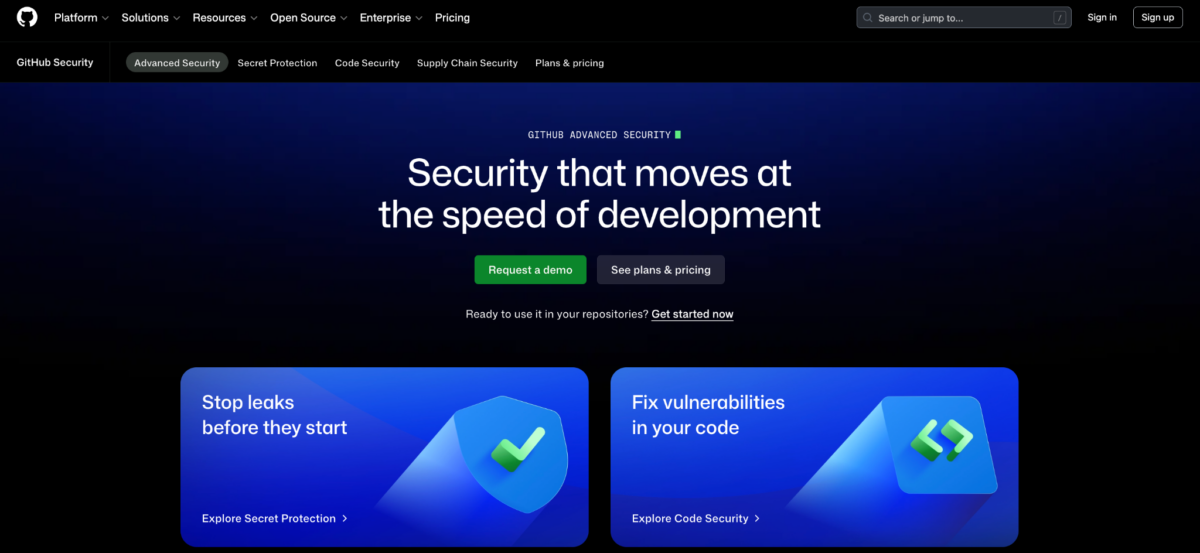
Not every organization wants another platform. Some would prefer security to appear where developers already work. That preference explains much of GitHub Advanced Security’s popularity.
Security findings show up directly within repositories, pull requests, and workflows that developers already use every day. Instead of asking engineers to learn another interface, the platform brings security closer to existing development processes.
For organizations heavily invested in GitHub, that simplicity can be difficult to ignore. Key capabilities include:
- Code scanning
- Secret scanning
- Dependency security
- Security campaigns
- Pull request integration
- Copilot Autofix
Teams looking to minimize workflow disruption often include GitHub Advanced Security in their evaluation process.
3. Semgrep
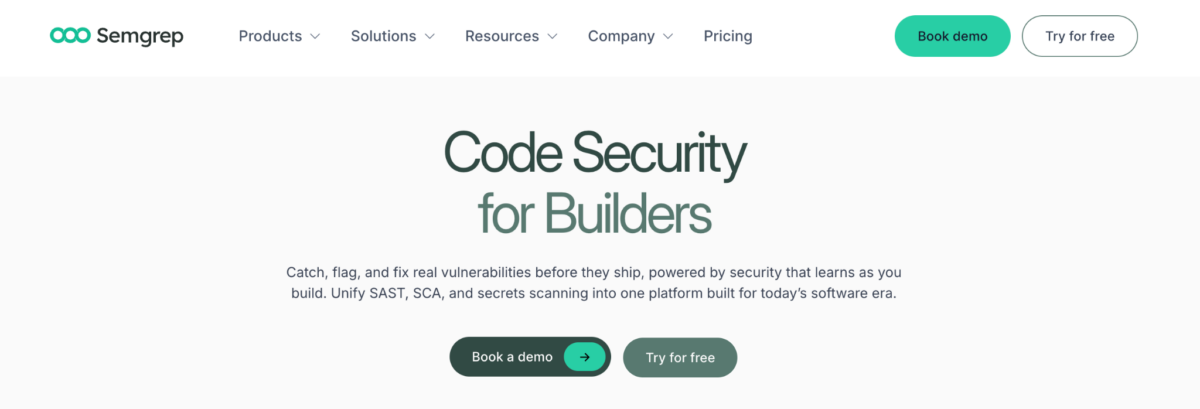
Most security tools are purchased by security teams. Many succeed or fail based on whether developers actually use them.
Semgrep has built a loyal following by focusing heavily on the developer experience. Rather than overwhelming teams with complexity, the platform emphasizes flexibility, custom rules, and workflows that fit naturally into engineering environments.
That approach has helped Semgrep gain traction among organizations where developer adoption is considered just as important as vulnerability detection.
Capabilities include:
- SAST
- Custom security rules
- Secrets scanning
- Supply chain security
- CI/CD integration
- Developer-focused workflows
For engineering-driven organizations, that balance often makes Semgrep an appealing option.
4. Veracode
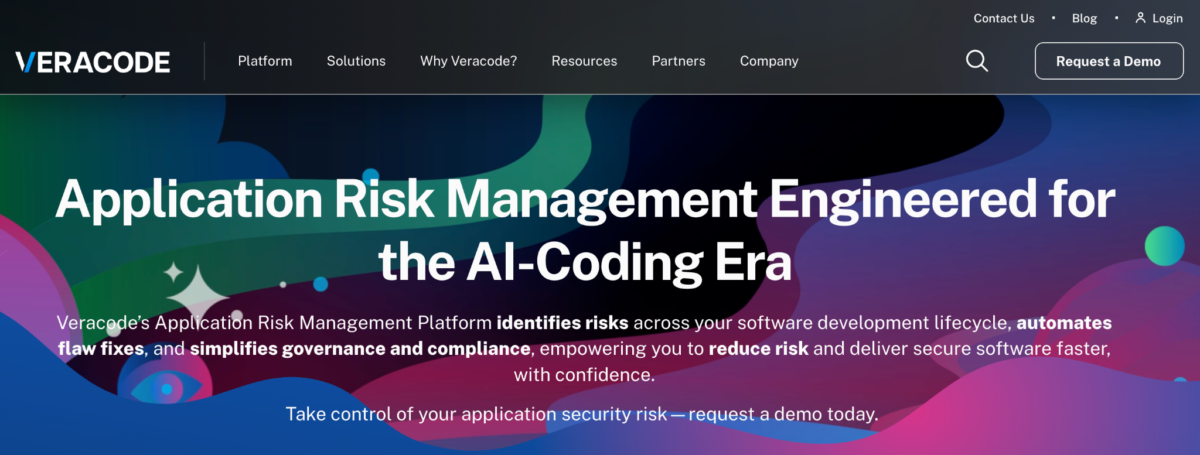
Some organizations are looking for a modern developer experience. Others are looking for maturity.
Large enterprises often evaluate security platforms differently than startups. Governance requirements are broader. Compliance obligations are heavier. Reporting expectations are more demanding. Security programs frequently involve multiple business units and large application portfolios.
This is where Veracode continues to attract attention. The platform has spent years serving organizations that require extensive testing coverage, reporting capabilities, and enterprise-scale security management.
Capabilities include:
- SAST
- DAST
- SCA
- Penetration testing
- Risk reporting
- Compliance support
For larger organizations operating mature security programs, Veracode remains a familiar name.
5. Checkmarx
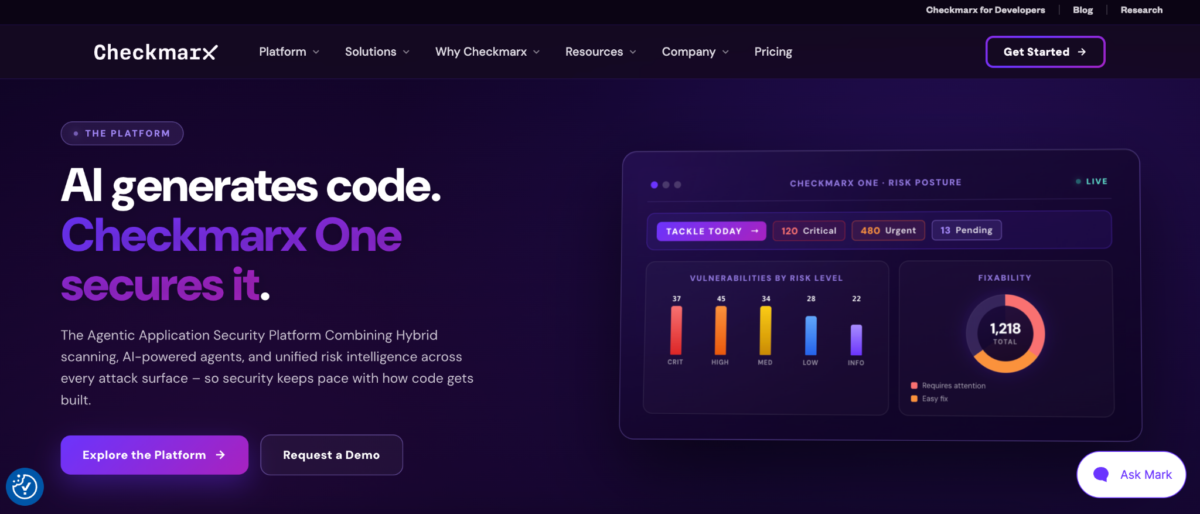
Security teams often face competing expectations. Developers want speed. Security teams want visibility. Leadership wants risk reduction.
Checkmarx has long positioned itself at the intersection of those priorities by offering broad application security coverage across multiple testing categories.
Organizations evaluating Checkmarx are often looking for a platform capable of supporting large-scale development environments without sacrificing visibility across software pipelines.
Capabilities include:
- SAST
- SCA
- API security
- IaC scanning
- Container security
- Supply chain security
For teams seeking extensive AppSec coverage, Checkmarx remains a common contender.
6. Mend.io
Open-source software solved many development problems. It also introduced entirely new security challenges.
Most modern applications rely heavily on third-party dependencies. Understanding which components are being used, which vulnerabilities affect them, and which licenses create compliance concerns has become a major responsibility for security teams.
Mend built much of its reputation by helping organizations manage those challenges. Capabilities include:
- Software composition analysis
- License compliance
- Dependency management
- Vulnerability remediation
- Supply chain security
Organizations with significant open-source exposure often place Mend high on their shortlist.
7. SonarQube
Security is not the only thing developers care about. Code quality still matters. Technical debt still matters. Maintainability still matters.
This helps explain SonarQube’s enduring popularity. Many teams originally adopt the platform because they want better code quality visibility. Security becomes part of a broader effort to improve development standards across the organization.
Capabilities include:
- Static analysis
- Code quality monitoring
- Security issue detection
- Technical debt management
- CI/CD integration
For engineering teams that view security and code quality as closely connected, SonarQube remains an attractive option.
8. Black Duck
The software supply chain has become impossible to ignore. Regulators are paying attention. Customers are asking questions. Procurement teams increasingly want visibility into third-party components and open-source dependencies.
As a result, software composition analysis is no longer viewed as a niche capability. Black Duck has spent years building expertise in open-source governance, dependency visibility, compliance reporting, and software supply-chain risk management.
Capabilities include:
- SCA
- License analysis
- SBOM support
- Open-source governance
- Vulnerability management
- Compliance reporting
Organizations operating in heavily regulated industries often evaluate Black Duck alongside other established AppSec vendors.
The Market Is Moving Toward Fewer Platforms, Not More
A few years ago, adding another security tool felt like progress. Today, many teams are moving in the opposite direction.
Security leaders increasingly talk about consolidation, prioritization, and reducing operational overhead. The challenge is no longer finding vulnerabilities. The challenge is managing them effectively without overwhelming developers or security teams.
That trend is changing how organizations evaluate AppSec vendors. Coverage still matters. Detection still matters. But the ability to reduce noise, prioritize risk, and simplify workflows is becoming just as important.
Which Alternative Makes the Most Sense?
There is no universal answer. A startup with a small security team will evaluate platforms differently from a global enterprise. An organization focused on supply-chain security will prioritize different capabilities than a company concerned primarily with cloud exposure.
The strongest evaluations usually begin with a simple question: What problem are we actually trying to solve?
For teams frustrated by tool sprawl, fragmented visibility, and security noise, platforms like Aikido offer a fundamentally different approach centered around consolidation. Other organizations may find stronger alignment with GitHub Advanced Security, Semgrep, Veracode, Checkmarx, Mend.io, SonarQube, or Black Duck, depending on their priorities.
The good news is that DevSecOps teams have more choices than ever before. The difficult part is deciding which platform best fits the way they actually work.