
You’re VP of Engineering at a Series B payments company. Your roadmap includes PSD2 compliance, real-time fraud detection, and a mobile wallet launch — all in just 90 days. The wrong partner could mean fines, delayed launches, and burned budget on fixes.
Most comparisons highlight generalist firms that handle compliance as a side task. We focused on fintech product engineering companies that bring real regulated-industry credibility and fast product delivery. These partners have actually built live payment systems before.
We checked for strong fintech expertise, proven PCI DSS and PSD2 work, product-focused culture, and senior architect involvement. The seven best fintech software development companies below made the list for regulatory strength and delivery speed. Each offers a different team approach and philosophy suited to your stage.
Here’s how the top 7 compare at a glance:
| Firm | Core Fintech Strength | Team Model | Compliance/Regulatory Focus |
| The Codest | Digital banking, scale-up products | CTO support, product-minded teams | Compliance and data governance |
| SumatoSoft | AI-powered custom fintech products | Agentic Development Lifecycle | Governed AI systems |
| ScienceSoft | AI implementation, IT consulting depth | 750+ consultants and engineers | Cross-industry regulated systems |
| SPD Technology | Payment platforms, regulated infrastructure | Senior architect-led partnerships | PSD2, PCI DSS compliance |
| Softonix | MVP and full product teams | Founder/CTO extension model | Startup-grade agility |
| NovusVista Technologies Private Limited | AI, cloud, IoT, blockchain | Lean, agile decision-making | Platform-builder approach |
| Abbacus Technologies | Custom web, mobile, AI solutions | ISO 9001-certified processes | Scalability and ongoing support |
Best Fintech Software Development Companies
The firms below represent different approaches to the same challenge: building regulated financial infrastructure that ships fast without collapsing under audit scrutiny.
Some lead with compliance architecture, others with product velocity—your choice depends on whether you’re racing toward Series A or preparing for SOC 2.
The Codest
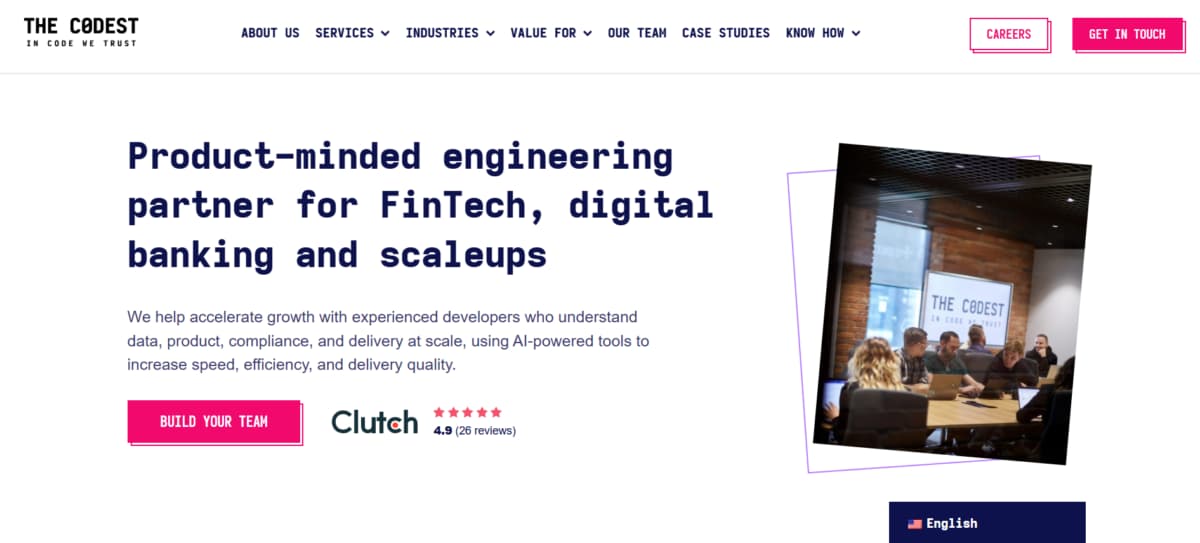
The Codest is a fintech product engineering company founded in 2020 with a strong product-first mindset from the start. They really get the push and pull between staying compliant and moving quickly. The team specializes in fintech, digital banking, and scale-ups — especially that tricky stage where payment systems, PSD2 rules, and product-market fit all come together.
What sets them apart from typical dev shops is how they treat compliance. Instead of treating it like a simple checkbox, they build it into sprint planning, architecture decisions, and roadmap discussions right from the first call.
You also get hands-on support from their CTO and an AI-powered approach that speeds up delivery. It feels less like hiring extra engineers and more like gaining a true strategic partner, especially when KYC requirements clash with conversion goals.
They’re particularly helpful for Series A and B fintech companies that need to scale their infrastructure while keeping the agility that helped them grow in the first place.
What sets them apart:
- Product-first engineering culture, not outsourcing commodity
- CTO-level strategic input on compliance vs. velocity trade-offs
- AI-powered tooling to compress delivery timelines
- Fintech and digital banking domain expertise built in
- Pricing model unpublished — engagement-based quotes only
SumatoSoft
SumatoSoft, a fintech product engineering company that started in 2012, brings 14 years of custom software experience. They’ve delivered 350+ products with a 98% satisfaction rate. Their Agentic Development Lifecycle creates AI systems that balance speed with the compliance rigor fintech scale-ups require.
They’re willing to challenge your plans when needed — questioning roadmaps, pushing for safer phased rollouts, and prioritizing long-term maintainability. That honest approach helps avoid the regulatory headaches that come from cutting corners in regulated fintech builds.
They operate as true partners, not commodity outsourcers, which makes them especially useful when technical decisions matter.
What sets them apart:
- 350+ custom products delivered since 2012
- Agentic Development Lifecycle for AI-governed systems
- 98% client satisfaction across fintech and regulated markets
- Engineering partner who challenges roadmaps, not rubber-stamps them
ScienceSoft
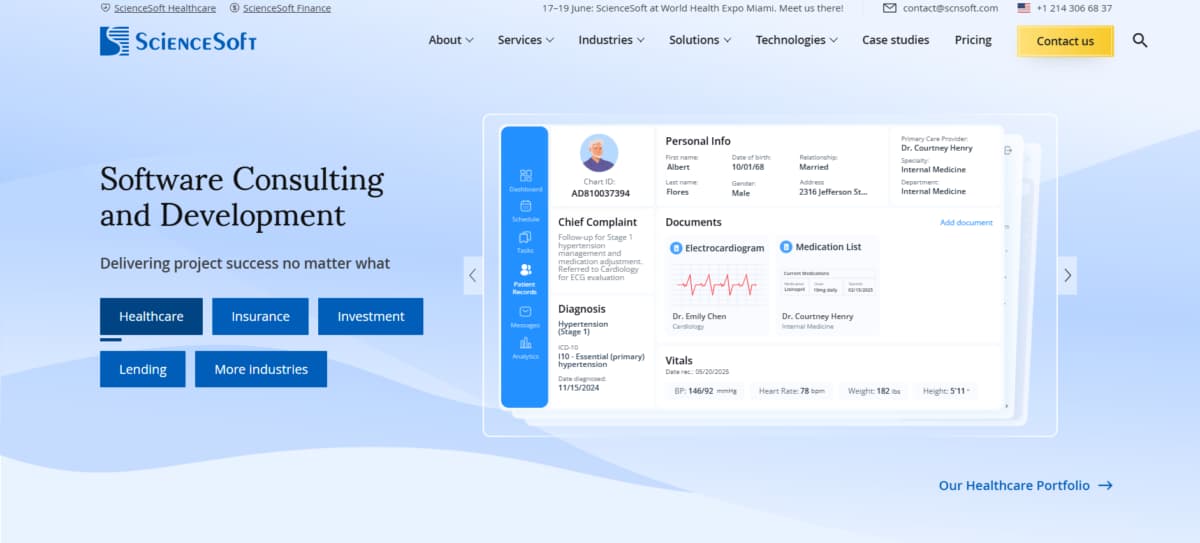
ScienceSoft started in 1989 and has grown into a fintech product engineering company with 37 years of experience. Their 750+ consultants have completed 4,200+ projects in banking, payments, and compliance-focused work.
They bring real-world knowledge of PCI DSS, PSD2, and complex data rules, plus strong skills in AI, consulting, and testing. Instead of just coding, they build systems that hold up under audits and heavy loads while using tools like machine learning for fraud and compliance.
This makes them valuable for both fintech scale-ups entering regulated markets and established players updating old platforms. They deliver the credibility auditors want alongside solid product speed.
What sets them apart:
- 37-year track record spanning 4,200+ enterprise projects
- 750+ engineering and consulting professionals in-house
- AI-powered delivery with compliance and testing rigor built in
- Multi-jurisdiction regulatory expertise (PCI DSS, PSD2, GDPR)
- End-to-end capability from architecture to ongoing QA
SPD Technology
SPD Technology is a fintech product engineering company founded in 2006 that specializes in custom payment infrastructure, digital banking platforms, and secure fintech applications. Compliance is integrated into the engineering process early, ensuring PSD2 and PCI DSS requirements are addressed throughout development.
Serving UK, US, and EU markets with a long-term partnership model, SPD avoids the commodity-outsourcing trap. Senior architects lead every engagement, bringing deep regulatory knowledge and production-hardened judgment to complex fintech builds.
When your product roadmap depends on regulated payment flows, clearing logic, or multi-jurisdiction compliance, this is the team that’s already solved it twice.
If you need fintech infrastructure that scales under regulatory scrutiny and doesn’t collapse when transaction volume spikes, SPD’s track record speaks for itself.
What sets them apart:
- 18+ years specializing exclusively in fintech and payments infrastructure
- PSD2/PCI DSS compliance engineered into architecture, not retrofitted later
- Senior architect involvement on every engagement, not junior offshore teams
- Long-term partnership model across the UK, US, and EU-regulated markets
Softonix

Founded in 2016, Softonix positions itself as an extension of the founder and CTO teams rather than a traditional outsourcing vendor. The firm has served 150+ clients with a 5.0 Clutch rating, building web platforms, mobile applications, MVPs, and full product teams for early-stage fintech companies that need regulated-industry awareness without enterprise-consulting overhead.
Their first milestone in 2 weeks or a free commitment signals confidence in scoping and execution velocity—critical when you’re racing to validate product-market fit in payments or embedded finance.
Regulatory depth isn’t their lead strength, but for pre-Series A fintech builders who need product-minded engineers fast, Softonix delivers pragmatic speed without sacrificing code quality.
What sets them apart:
- First milestone guaranteed in 14 days or no charge
- Team integrates as an extension of the internal product org
- Full-stack capabilities: web, mobile, MVP, product teams
- 5.0 Clutch rating across 150+ client engagements
- Startup-native velocity with founder-CTO collaboration model
NovusVista Technologies Private Limited
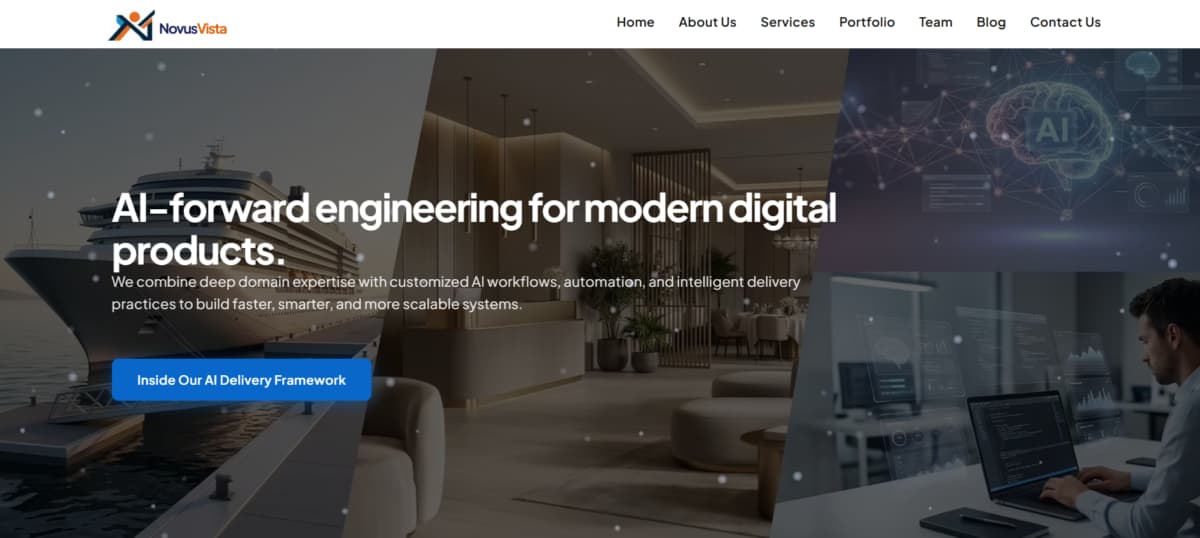
NovusVista Technologies Private Limited works as an engineering partner, not a standard vendor. This fintech product engineering company covers AI, cloud, IoT, blockchain, and big data — all critical for building stable yet innovative fintech systems.
They emphasize quick decisions and a lean, agile process that skips heavy bureaucracy. This velocity is useful for scale-ups developing mobile and web applications under time pressure. Their focus stays on platform building rather than feature-by-feature work.
They don’t share much public information on pricing, team size, or fintech-specific case studies, and their regulatory experience isn’t well documented. Still, their tech aligns with modern payment and digital banking needs. Consider them if you need AI capabilities and prefer fast execution over an established compliance pedigree.
What sets them apart:
- AI, blockchain, IoT, and big data specialization for fintech infrastructure
- Platform-builder mindset with engineering partner approach
- Lean decision-making: hours instead of weeks
- Enterprise and mobile application development focus
- No published fintech compliance case studies
Abbacus Technologies
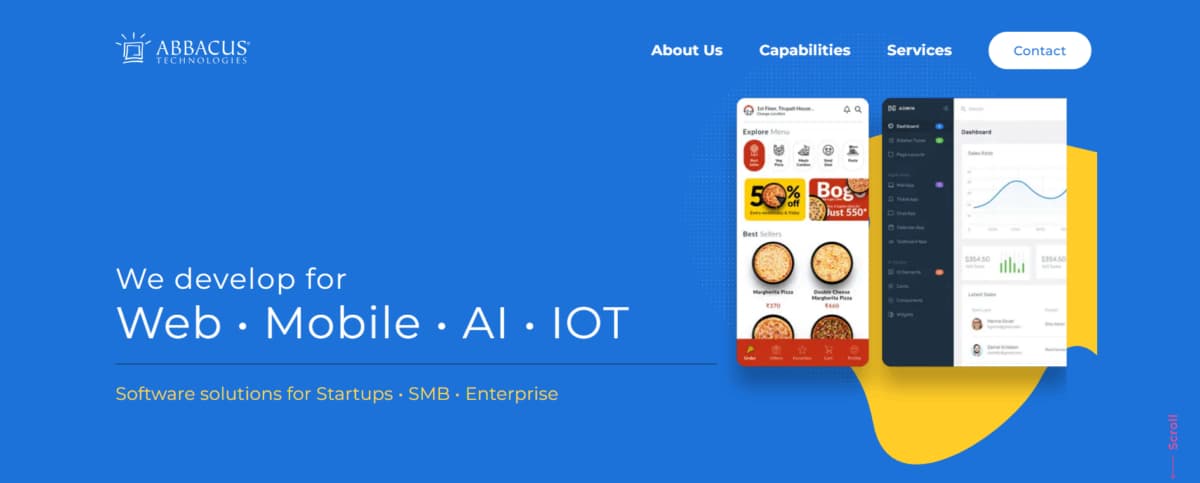
Abbacus Technologies has been around for over 20 years as a fintech product engineering company. They focus on bringing structure and discipline to custom fintech and e-commerce builds. The ISO 9001:2008 certification helps when you need proper audit trails for regulated payments or consumer wallets.
With 1,000+ clients across 40+ countries and a strong 4.8-star Clutch rating, they deliver consistently on web, mobile, and AI platforms. They’re particularly good at scalability and ongoing support after launch.
That said, they’re generalists rather than fintech-only specialists. You’ll get solid execution on common tech, but maybe less guidance on emerging payment protocols or tricky PSD2 issues. Worth considering if process rigor and experience matter most to you.
What sets them apart:
- ISO 9001:2008 certified with 20+ years delivering regulated-industry projects
- 1000+ clients across 40+ countries, 4.8-star Clutch rating
- Custom web, mobile, AI-powered, and eCommerce solution expertise
- Strong post-launch support, scalability tuning, and ongoing optimization
- Generalist IT consulting model with proven enterprise delivery rigor
Frequently Asked Questions
Q: How much does fintech product engineering typically cost in 2026?
A: Rates vary by team model and geography. Expect $75-150/hour for senior engineers with payments domain expertise, or $8,000-20,000/month for dedicated team pods. Fixed-price MVP builds for regulated fintech products often start at $80,000-150,000. Compliance-heavy projects (PSD2, PCI DSS integration) command premium rates due to specialized architect involvement.
Q: How long does it take to build a compliant fintech MVP?
A: 3-6 months for a minimum viable product with basic regulatory guardrails. Full-featured platforms with payment processing, KYC/AML workflows, and multi-jurisdiction compliance typically require 9-18 months. Timeline depends on regulatory scope—UK FCA-regulated products move faster than multi-state US money transmitter builds.
Q: Do fintech engineering firms offer free discovery phases?
A: Many provide 1-2 week paid discovery sprints ($5,000-15,000) to validate technical feasibility and compliance requirements before committing to full builds. Completely free scoping is rare for regulated fintech work—domain expertise and architect time carry real cost. Some offer refundable discovery fees if you proceed to implementation.
Q: What’s the difference between product engineering and staff augmentation for fintech?
A: Product engineering firms own delivery outcomes—architecture, compliance strategy, and roadmap execution. Staff aug places individual developers under your management. For regulated fintech, product partners bring pre-built compliance frameworks and payments infrastructure experience that lone contractors lack.
Conclusion
Here is how we selected these seven firms.
We prioritized payments expertise, regulatory compliance track records, and product-minded culture over general development capabilities. Our assessment drew from company profiles, public case studies, and competitive analysis of regulated-market delivery.
We gave extra weight to senior architect involvement and genuine partnership models—not just staff augmentation. The seven firms below met these standards. They have built live payment systems and demonstrated consistent delivery under regulatory pressure.