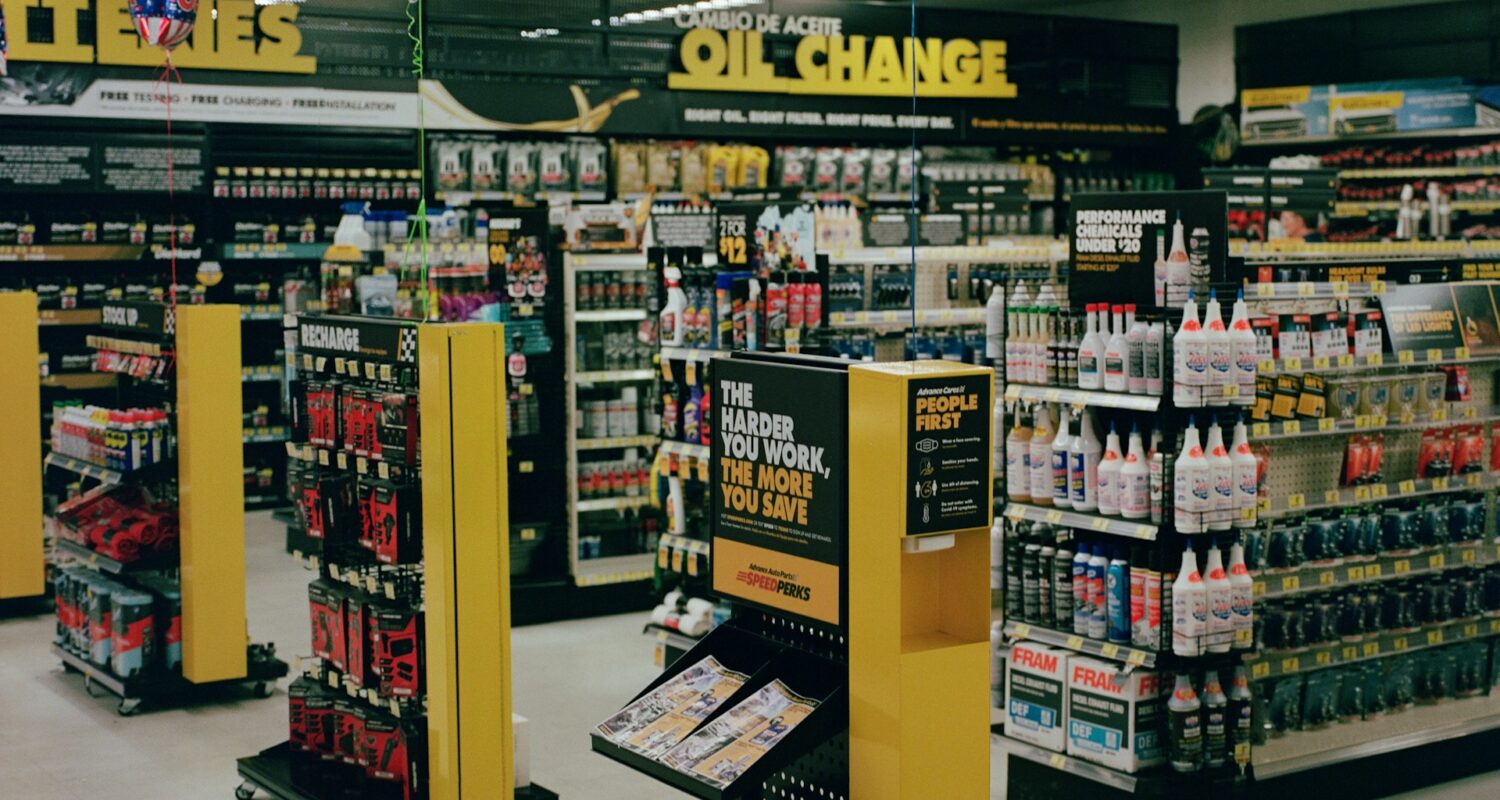
CPG brands need shelf visibility and order capture. Most tools only do one. Audit platforms track compliance but lack orders. Order platforms process sales but miss shelf conditions.
This creates gaps. Merchandisers see problems reps never learn about. Reps order without knowing shelf status. Delivery teams work from disconnected data. Results include manual reconciliation, slow out-of-stock responses, and lost revenue.
The five platforms below combine retail execution, sales, and distribution differently. Some unify audits, orders, and delivery. Others focus on AI compliance or B2B automation. Choose based on your need: visibility, orders, multi-region sales, or AI commerce.
The following sections cover what retail execution software does, a decision framework, platform comparisons, and FAQs.
What Retail Execution Software Actually Does
Retail execution software brings together the daily in-store tasks for CPG brands and distributors: shelf audits, planogram compliance, photo reporting, demos, and visit tracking. It focuses on that critical last part of the customer journey — making sure products are visible and available on the shelf.
This category appeared because supply chain visibility often stopped at the warehouse. What happened inside stores was hard to track.
Old workflows relied on multiple disconnected tools. Modern platforms aim to simplify this, but most still specialize. Some are great at audits but not orders. Others handle orders well but treat audits as an afterthought.
For DSD teams, the key question is whether you need a pure audit tool or a unified platform that links shelf checks directly to orders and deliveries.
How to Choose: Decision Framework for 2026
Picking the right retail execution software in 2026 comes down to matching the tool with how your team actually works.
Start with the basics: Does the platform unify shelf audits and order capture, or will you end up running two systems? If your merchandising and sales teams are separate, a dedicated audit tool might be enough. But if the same reps do both, a unified platform will save a lot of time.
Other key factors include:
- Whether the software supports your regions and currencies, or if it’s mainly built for the US market.
- Pricing clarity — open per-rep rates versus custom quotes.
- Mobile experience — true offline functionality for field reps versus strong web dashboards for the office.
- How easily it connects with your existing tools (native integrations are much smoother).
- And most importantly, the platform’s main strength — shelf audits or order capture.
Take time to weigh these points against your daily reality before deciding.
Retail Execution Software: 5 Platforms to Compare
The five platforms below combine retail execution, sales, and distribution differently. Some unify audits, orders, and delivery. Others focus on AI compliance or B2B automation. Choose based on your need: visibility, orders, multi-region sales, or AI commerce.
Each breakdown covers capabilities, weaknesses, and best fit.
Repsly — Audit-First Retail Execution with AI Image Recognition
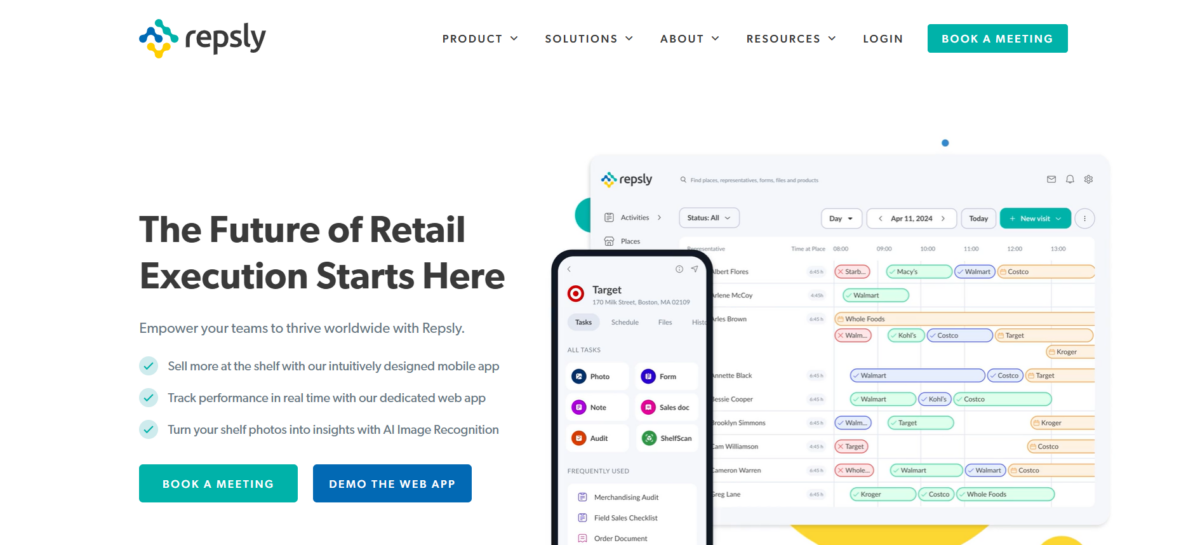
Repsly is a solid retail execution platform for CPG brands and merchandising teams focused on what’s actually happening in stores.
It makes it easier for field reps to collect consistent data during visits and turn that into clear insights. One of its best features is AI-powered image recognition that reads shelf photos, checks compliance, and reduces manual work.
You’ll find it commonly used for planogram audits, tracking product availability, monitoring competitors, and running promotions. The platform also offers visit tracking, territory planning, and task tools, while managers stay updated with real-time dashboards.
Typical use cases:
- Planogram compliance verification
- Competitor shelf placement tracking
- Promotion execution monitoring
- On-shelf availability audits
Repsly is primarily positioned as a retail execution and merchandising solution. While it offers some order and return tracking capabilities, it does not cover full order-to-cash workflows or DSD operations. Teams that need order capture, invoicing, or delivery route planning will need a second system.
Weakness: Users report that back-office functions can feel clunky and poorly organized, along with occasional app logouts, stability problems, and usability issues in certain workflows. (G2 reviews)
Who Should Still Choose Repsly
Repsly is a strong choice for mid-sized to large CPG companies and retail service organizations that prioritize in-store visibility and audit accuracy. If your merchandising team operates separately from your sales team, and compliance data is your primary field output, Repsly’s AI-powered shelf analysis delivers measurable time savings.
SimplyDepo — Unified CPG Workflow for SMB Distributors
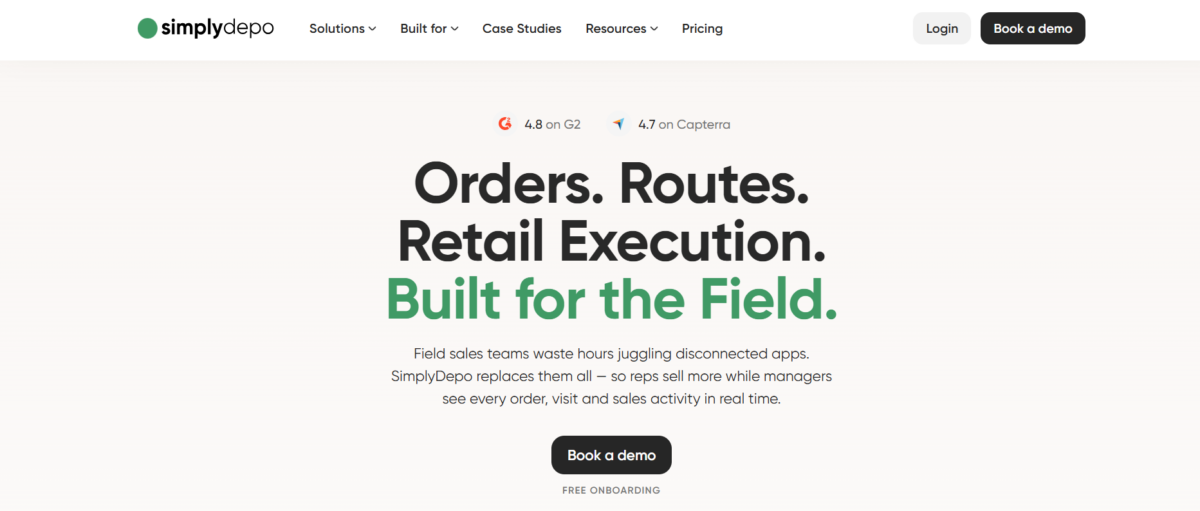
SimplyDepo is retail execution software for CPG brands and distributors — a mobile-first platform that unifies shelf audits, planogram compliance, photo reporting, in-store demos, and visit tracking in a single app that also handles field sales order capture, DSD route planning, van sales, invoicing, and native QuickBooks & Shopify sync.
Most field sales apps stop at the order. SimplyDepo closes the gap: the same rep who audits the shelf captures the reorder, plans tomorrow’s route, runs the delivery, and syncs the result to accounting.
Starting at $89/rep/month with simple monthly billing, no annual contracts, no setup fees, and a 30-day free trial that includes free team training. You’re up and running in days, not months. The platform works offline — critical for rural stores, warehouses, and trade shows — and syncs automatically when connectivity returns.
Core capabilities:
| Feature | Implementation |
| B2B Order Management | Quote, order, invoice in-app |
| Retail Execution | Shelf photos, planogram checks |
| Route Planning | Optimized delivery sequences |
| Route Optimization | AI-driven route efficiency |
SimplyDepo focuses exclusively on consumer packaged goods workflows, offering AI-driven insights that predict demand, identify high/low-performing SKUs, optimize delivery routes, and detect merchandising compliance gaps in real time.
The platform doesn’t try to serve every industry — it’s purpose-built for CPG teams that live in stores, manage inventory at the SKU level, and need order-to-delivery visibility without stitching together three separate tools.
Weakness: Limited to US and Canada operations — not designed for multi-region EMEA or APAC deployments with multi-currency requirements.
Who Should Still Choose SimplyDepo
SimplyDepo fits SMB and mid-market CPG brands and distributors operating in the US or Canada that rely on in-store visits.
Teams replacing multiple tools (audit app + order app + spreadsheets) with one mobile workflow will see the fastest ROI. Best for companies that want to avoid enterprise pricing and multi-month implementations.
GoSpotCheck — Mobile Task Compliance Across Industries
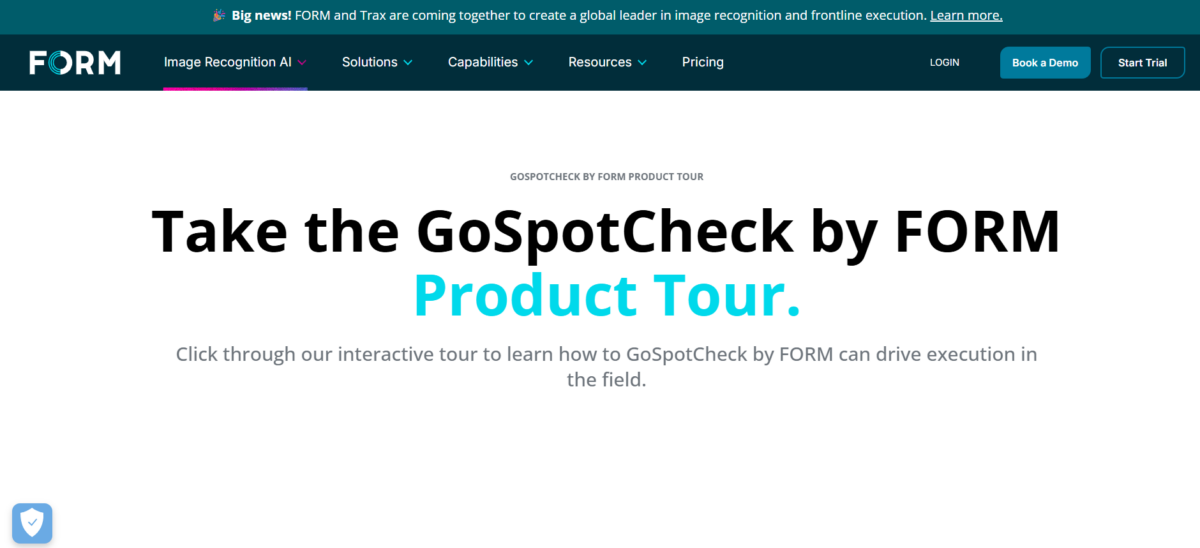
GoSpotCheck, now part of FORM, is a mobile field execution platform built for frontline teams that want structured workflows and real-time visibility.
It’s used across many industries — including consumer goods, retail, hospitality, and facilities management. Teams rely on it for store audits, surveys, photo capture, and consistent task execution across locations. The platform emphasizes task management, data collection, and compliance tracking.
Key strengths include image recognition for faster photo analysis and custom workflow tools. Managers get live dashboards to monitor activity and performance.
Strengths:
- Cross-industry task workflows
- Image recognition for compliance
- Real-time manager dashboards
The platform is designed to support daily operations and frontline coordination rather than full sales or distribution processes. It is commonly used by organizations that prioritize compliance, task execution, and visibility across dispersed teams.
Weakness: Some users mention connectivity issues, and the platform is positioned around field execution/audits rather than order capture, invoicing, or DSD workflows. (G2 and Capterra reviews)
Who Should Still Choose GoSpotCheck
GoSpotCheck fits mid-sized and enterprise companies that need scalable audit and task management systems across multiple industries.
If your field operations span retail, hospitality, and facilities — and compliance tracking matters more than order capture — GoSpotCheck’s workflow flexibility and image recognition deliver value beyond CPG-specific tools.
Skynamo — International Field Sales with Multi-Region Support
Skynamo helps manufacturers, wholesalers, and distributors manage field sales and B2B operations, especially across regions.
The platform offers a mobile app for reps to handle visits, access catalogs, and capture orders directly. Customers can order through a branded portal, while managers get sales analytics and AI-powered insights through Radar AI.
Main strengths:
- Mobile order capture
- Branded B2B portal
- Multi-currency & multi-region support
- AI sales insights
Weakness: Users mention limited app layout customization and occasional connectivity issues. It is stronger for sales operations than dedicated retail execution. (G2 and Capterra reviews)
Who Should Still Choose Skynamo
Skynamo is well-suited for international B2B sales teams that operate across multiple regions and sales channels.
Manufacturers, wholesalers, and distributors outside North America that need field sales tools, order capture, and customer self-service portals in one system will find it useful — especially when multi-currency and multi-region support are non-negotiable.
WizCommerce — AI-Powered B2B Commerce with Field Order Support
WizCommerce is an AI-driven platform for wholesalers, distributors, and manufacturers that combines B2B eCommerce with field sales tools.
It features a customer-facing storefront and mobile tools for reps to take orders, create quotes, and manage relationships. The platform handles payments and supports orders from multiple channels, including marketplaces and EDI.
AI helps automate quotes, suggest products, and flag follow-ups. Teams also benefit from real-time inventory visibility, smart catalogs, and solid integrations with ERP and accounting systems.
Key automation features:
- AI-generated quotes
- Product recommendations based on customer behavior
- Automated follow-up prioritization
- Real-time inventory visibility
WizCommerce is primarily positioned as a B2B commerce and order management platform with a strong focus on automation and digital sales channels.
While it supports sales reps in the field, it does not focus on retail execution tasks such as in-store audits, merchandising, or shelf compliance. Teams that need planogram checks or photo-based compliance audits will need a separate tool.
Weakness: Users list some weaknesses around the learning curve, inaccuracy, complex implementation, accuracy issues, and access issues. It is not positioned for shelf audits, merchandising, or retail execution. (G2 reviews)
Who Should Still Choose WizCommerce
WizCommerce suits wholesalers looking to improve online ordering and rep-led sales with strong AI features. It’s ideal for companies prioritizing digital channels, automated quotes, and product recommendations over in-store execution.
Frequently Asked Questions
Q: Can it work offline?
A: Strong mobile platforms allow offline use in low-connectivity areas with automatic syncing. This is essential for field reps. Web-based tools usually need a constant internet connection.
Q: What’s the difference between retail execution and field sales software?
A: Retail execution is about shelf audits, planograms, and merchandising compliance. Field sales focuses on orders, CRM, and pipeline management. Unified platforms do both.
Q: Do I need separate tools for audits and orders?
A: Separate tools work if merchandising and sales teams are different. Unified platforms are better when the same reps handle both audits and orders, especially in DSD.
Q: How long does implementation take?
A: SMB tools: a few days. Enterprise platforms: 30–90 days, including custom configuration and integrations.
Conclusion
We evaluated these five platforms using real company data: their positioning, founding year, pricing clarity, and feature strength for CPG retail execution. We excluded generic tools that lack a clear fit for distributors and brands.
The core issue in this space remains unchanged — audit tools and order tools often don’t talk to each other. The platforms we selected differ in how well they combine shelf compliance with order capture.
Take time to map your team’s actual workflow first. A short 30-minute call can show whether you need a unified solution or something more specialized.